20th April 2023
21st April 2023: Departure and Arrival in Addis Ababa
Today, we were flying from Heathrow Terminal 2 to Bole International Airport in Addis Ababa on a late 9:30 pm flight. We could afford a leisurely morning for once, waking at a reasonable hour and completing our final preparations without any rush.
We like to arrive at the airport in good time before a flight, especially when travelling via the M25 and through London traffic. So, after a substantial lunch to “charge the batteries” and a spot of ‘Bargain Hunt’ on the TV, we set off.
We needn’t have worried, just under two hours later, we were parked at the King William pub in Sipson, a mere 2.8 miles from the Short Stay car park adjacent to the terminal. We’ve used this pub before to while away an hour or so, safe in the knowledge that it’s only an eight-minute drive to the airport. I remember a previous visit when the village was filled with signs protesting “No Third Runway!” Had the plans gone ahead, Sipson would have been wiped off the map and now lie beneath tons of concrete. Thankfully, the decision went against the planners. So, we enjoyed a couple of hours with drinks, watching IPL cricket on a large screen.
By 5:30 pm, we’d dropped the car off at ‘Meet and Greet’ and joined the lengthy queue shuffling towards check-in and baggage drop. An hour later, we had made it through enhanced security and were sitting in departures with a £4.99 meal deal, waiting for our gate to be announced.
As part of a new trial, security was testing a biometric scanning system for selected passengers. I was among the “lucky” few. The process included a full body scan, followed by separate scans of my hands and feet, and finally a manual body search with a wand to ensure the machines were functioning correctly. It delayed me a little, but if implemented, it should mean passengers no longer need to remove and separate items like shoes, belts, coats, liquids, or electronics at security.
Our flight departed on time, and the seven-hour forty-five-minute journey passed reasonably well. The food and drinks were tasty and plentiful, and the seats allowed for a modest amount of sleep. We both managed to watch a film, and I had a long, interesting conversation with an Eritrean gentleman beside me, who was returning home briefly to see his wife and four children after working in London.
21st April 2023: 6:30 am – Addis Ababa
It was misty as we landed, the surrounding city veiled in wisps of early morning cloud. The cabin had been uncomfortably warm, so it was a welcome relief to step out into the cool, fresh air.
Although there was another long, winding queue at Immigration, we moved through fairly swiftly and soon found ourselves in front of an officer with our passports and slightly troublesome Ethiopian visas. I was half-expecting them to be rejected and for us to be placed on the next plane home, but thankfully, our paperwork was approved and stamped without issue.
At baggage reclaim, our suitcases were already waiting, a small but welcome victory.
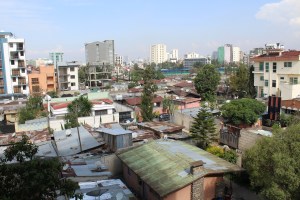
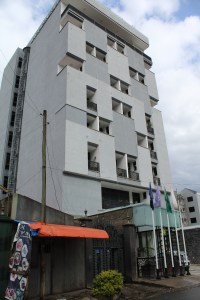
As we exited the terminal building, we were immediately greeted by a young man holding a sign bearing the name of our group. We were the first to arrive, but before long, three other group members turned up: Pat, Carol, and Kim. Once we’d all gathered, we boarded a minibus that would take us to our hotel for the night. En route, we were informed that seven more members would be joining the group, some later this evening, others tomorrow.
The ‘Triple E Hotel and Spa’ was only a short drive away, though the journey took us through typically busy city traffic. It wasn’t long before we had checked in and begun making arrangements with the others for a city tour.
The day was already warming quickly. After changing out of our travel clothes, we regrouped at 10 a.m. in the hotel foyer. We boarded the minibus once again and set off through the frenetic traffic towards the National Museum of Ethiopia.
Founded in 1944, the museum’s collection was developed throughout the 20th century, primarily featuring artefacts from northern Israel and Eritrea, many of which were unearthed by French archaeologists. Its most famous exhibit is a model of “Lucy,” the fossilised skeleton of a hominid estimated to be around 3.2 million years old, belonging to the species Australopithecus afarensis.
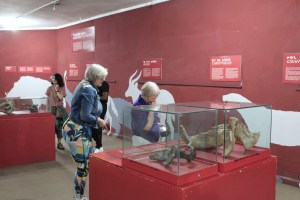

The skeleton, standing about one metre tall and weighing an estimated 30 kg, was discovered on 24th November 1974 at an archaeological site in the valley of the lower Awash River. The museum’s displays are spread across four floors and are clearly presented and well described. Our guide was very knowledgeable and added greatly to our understanding as we wandered from one artefact to the next.
The building itself was originally a palace belonging to Emperor Haile Selassie. After visiting Europe, he repurposed it to promote the education of the Ethiopian people, a forward-thinking move at the time.
Our next stop was a small city restaurant, where we paused for a meal and some refreshments. I opted for a traditional Ethiopian breakfast dish called Firfir. It was delicious and very filling, and I washed it down with a perfectly acceptable local beer.
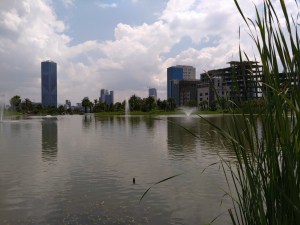
We continued our tour with a visit to Unity Park, located within the grounds of the Grand Palace. The park spans a beautiful and tranquil 40 acres, filled with well-tended flower gardens. A lake within the grounds offers a stunning backdrop of the modern Addis Ababa skyline. Popular with locals, the park was busy during our visit, and we saw several wedding parties posing for photographs to mark their special day.
Security at the entrance was understandably tight, given that the Prime Minister’s residence is part of the complex. We were thoroughly searched, and our cameras were temporarily, and somewhat confusingly, confiscated, although we were allowed to keep our mobile phones. Despite this minor inconvenience, Unity Park is well worth a visit.
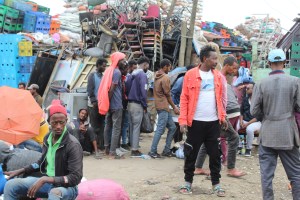
Our next stop was Addis Ababa’s vast and renowned market district. Unfortunately, because it was Ramadan, the market had closed for the afternoon. However, we did make a brief and rather tense stop at the recycling area. Here, all manner of discarded materials are broken down and repurposed. The streets and pavements were packed with men of all ages, either seated or engaged in various recycling activities. Many appeared openly hostile to the presence of a small group of European tourists with cameras, shouting or gesturing for us to leave. We quickly respected their wishes and returned to our bus.
Back at the hotel, Sue and I recharged with a short nap before changing for an excellent evening meal in the hotel restaurant. Tomorrow, we fly to Lalibela, often referred to as the ‘New Jerusalem’, famous for its extraordinary rock-hewn churches.
22nd April 2023: (Lalibela)
We had a rather disturbed night’s sleep. There was no air-conditioning unit in the room, but as Addis Ababa sits at an elevation of 2,600 metres above sea level, we mistakenly assumed there was little risk of mosquitoes, especially being on the third floor and seeing no tell-tale specks of dried blood on the otherwise pristine white walls. In an effort to cool the room, we opened the window.
At 2.30 am, I was abruptly awoken by the high-pitched whine of a thirsty mozzie. Lights on, the hunt began, five of the biting devils met their end via a well-aimed hand towel. Half an hour later, two more were dispatched against the wall, followed by another two not long after. Unfortunately, one managed to feed uninterrupted on Sue’s arm before being flattened.
We managed to drift off again until 6.30 am, when a clap of thunder and the roar of torrential rain pounding on the tin roofs of the surrounding shacks jolted us awake. We were, ironically, showered and enjoying a rather eclectic breakfast by 7.30 am.
Three new members of our group had arrived at around 2 am, and we met them in the hotel foyer at 9 am before boarding the bus to the airport. They were American. Another couple from the USA had missed one of their connections, but we were due to meet them at the airport, which, as it turned out, we did.
Security is taken very seriously throughout Ethiopia, and I soon fell foul of the regulations at the airport. All luggage is scanned upon entering the building and again after check-in. During the first scan, I was pulled out of the queue and asked to open my suitcase, as was another member of our group. Our shared offence: packing binoculars. The authorities are highly cautious, concerned they might be used to observe military installations or government buildings. Apparently, a permit is required.
After a short wait and a phone call to a supervisor, we were eventually waved through, binoculars now relocated to my rucksack and still without a permit. However, I was stopped again at the second security check. Once more, I was asked to show the binoculars, and once again, following another phone call, I was allowed to proceed.
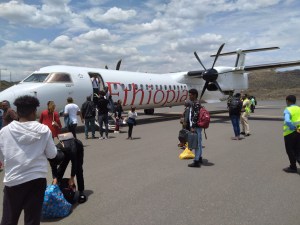
The remainder of our journey to the aircraft passed without incident. Despite our concerns that the early morning storm might cause turbulence, the one-hour turboprop flight to Lalibela departed just 20 minutes late and was surprisingly smooth. We were even served a sandwich and a drink during the flight.
Our guide, who was born in Lalibela, received a warm welcome from many of the airport staff as we arrived at the small terminal to collect our luggage. We boarded our minibus and set off along a deeply potholed dirt road, eventually reaching a tarmacked surface. The 20 km journey to Lalibela involved navigating past numerous groups of locals herding small flocks of goats, donkeys, or oxen, presumably on their way to market, as Saturday is the designated market day.
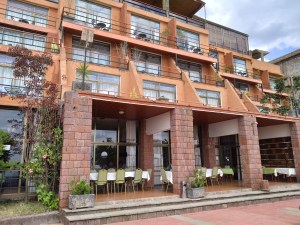
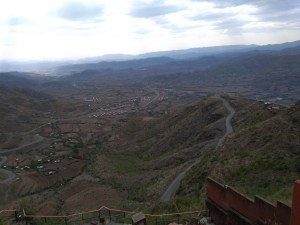
Our hotel, the Panoramic View Hotel, was located just off the main thoroughfare on the edge of Lalibela, at the end of a rutted lane. The minibus scraped its underside as we turned into the small parking area in front of the building. After checking in, we were delighted to find that the view from our room and balcony was truly spectacular, overlooking a vast valley stretching towards distant, arid mountains.
After a quick change into something cooler, we headed down to the hotel restaurant for a typically Ethiopian lunch.
Back on the bus, we made the short journey through the bustling town to visit the first of the famed ancient rock-hewn churches, the reason we had come all this way. These extraordinary structures were carved over 900 years ago during the reign of King Lalibela and are still in active use today.
Our first stops were Biete Medhane Alem and Biete Maryam.

 The churches were hewn directly from a hill of volcanic rock, and the resilience of the material is astonishing; despite nine centuries of exposure, they show remarkably little erosion. Today, protective roofing shelters the buildings from the harsh local climate.
We circled the larger Biete Medhane Alem, pausing frequently for photos and to listen as our well-informed guide recounted its history. Then, after removing our shoes, we stepped into the cool, dim interior.
 The church is still in frequent use by both locals and tourists. Its interior is carpeted, with benches and wall hangings adding to the atmosphere. Once again, we listened as our guide explained how the building is used in acts of worship. We were told that the most important artefact in the church is a gold cross, usually kept locked away and out of sight. However, it is brought out to be viewed once a week, on Sundays. We shall return tomorrow to witness its magnificence.
Leaving the churches, we paused for a while in the square outside to listen to some rustic Ethiopian music blasting from a large speaker set high in the branches of a tree. The music was played on an instrument with just one string and sounded remarkably similar to that heard during Chinese folk concerts on past holidays.
Returning to the hotel, we gathered as a group for the evening meal (the same menu as lunch) before retiring to our rooms for a fairly early night.


Leave a comment